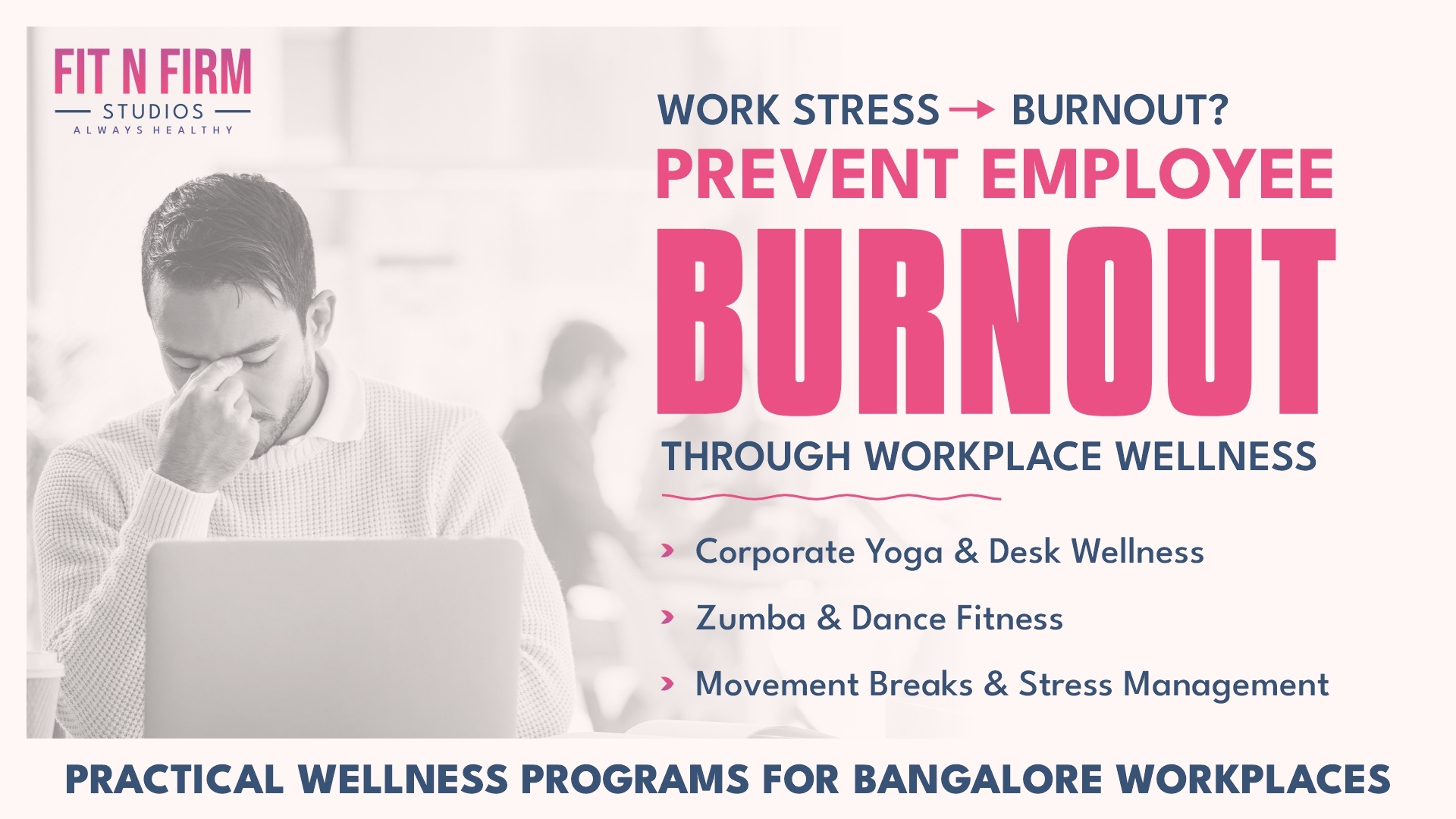
How to Prevent Employee Burnout Through Workplace Wellness Programs in Bangalore
2026-09-19
Bangalore has built its reputation as India's tech and startup capital — and that reputation comes with real pressure on the people behind it. Long hours, high-pressure deliverables, late-night calls with global teams, and long commutes are simply part of daily life for many employees here. Ask HR leaders in any mid-to-large Bangalore company what keeps them up at night, and "burnout" comes up almost as often as "attrition." The two are closely connected.
Burnout isn't a passing bad week — it's a state of ongoing workplace stress that hasn't been effectively managed. Unlike the fatigue that fades once a deadline passes, burnout tends to build quietly over months, eventually showing up as disengagement, absenteeism, or an employee handing in their resignation with little warning.
The reassuring part is that organizations aren't powerless here. While no program can eliminate every source of workplace stress, companies can take practical, consistent steps to reduce its impact and support employee wellbeing. Well-designed employee wellness programs in Bangalore can give companies a practical framework for incorporating regular movement and wellbeing activities into the workday — and one of the most effective, low-friction approaches is building workplace wellness programs in Bangalore that fit into the actual rhythm of the workday, rather than existing as a poster in the break room.
Understanding What's Driving Burnout in Bangalore's Workforce
Before looking at solutions, it helps to understand the everyday pressures that contribute to burnout in Bangalore's corporate environment:
Overlapping time zones. Many Bangalore-based teams work with US, European, or Middle East clients, which often means early morning or late-night calls layered on top of a normal workday.
Long commutes. Traffic in Bangalore can meaningfully cut into the time employees would otherwise spend resting, exercising, or simply decompressing before and after work.
"Always-on" culture. Slack messages, WhatsApp groups, and email notifications rarely stop at 6 PM, especially in startups and client-facing roles.
High-performance expectations. Competitive industries like IT, product, and consulting often equate visible busyness with commitment, which can discourage employees from taking real breaks.
Sedentary work patterns. Long hours seated at a desk, often hunched over a laptop, contribute to physical tension that compounds mental stress.
None of these factors is likely to disappear on its own. That's part of why built-in wellness — rather than occasional perks — has become a meaningful part of how forward-thinking companies support their teams.
What Burnout Actually Looks Like Inside a Team
Burnout is often mistaken for laziness, disengagement, or a "bad attitude," when it's more accurately a response to sustained stress that hasn't had an outlet. Common signs HR and team leads can watch for include:
1. Previously proactive employees doing only the bare minimum
2. An increase in sick leave, particularly around major deadlines
3. More irritability, conflict, or withdrawal in meetings
4. Reduced creativity or strategic thinking, even from strong performers
5. Physical complaints — tension headaches, back pain, disrupted sleep — with no obvious cause
6. Employees who used to socialize at work becoming quieter or more isolated
Because these signs tend to develop gradually, by the time they're visible in performance reviews or attrition figures, the underlying stress has often been building for some time. This is why a proactive approach to wellness matters — addressing stress before it escalates is easier than managing its aftermath.
Why Standard Wellness Perks Fall Short
Most companies in Bangalore already offer something — a gym membership reimbursement, an annual health check-up, perhaps a wellness webinar during a designated awareness month. These aren't bad ideas, but they share a common limitation: they place the responsibility for "finding time for wellness" entirely on an employee who is often already stretched thin.
An employee coming off a long workday and a long commute is unlikely to make it to the gym on their own steam. This is a key reason many corporate wellness services in Bangalore are shifting toward on-site or scheduled-during-work-hours formats, where wellness is brought to the employee rather than added as one more thing on their to-do list.
Movement-Based Wellness: A Practical Way to Break the Stress Cycle
Physical movement can be a practical way to introduce a meaningful break into a demanding workday. Even short, structured sessions can offer employees a genuine mental reset.
Corporate Yoga: Slowing Down and Releasing Tension
Corporate yoga classes in Bangalore work well because they combine gentle physical movement with breathing and relaxation techniques. Stretching helps release the muscular tension that builds up from hours of desk work, particularly around the neck, shoulders, and lower back. Slow, guided breathing gives employees a structured pause from screens and deadlines — a chance to consciously step out of "work mode," even briefly.
A good corporate yoga instructor in Bangalore understands that office yoga needs to look different from studio yoga. Sessions are typically adapted to the setting — chair-based stretches for teams that can't step away from their desks for long, short breathing breaks before high-stakes meetings, and longer sessions during dedicated wellness days or offsites. The goal isn't to turn employees into experienced yoga practitioners; it's to give them simple tools they can return to whenever the day gets overwhelming.
Corporate Dance Fitness (Zumba): Energy and Team Connection
Not every team needs calm — some benefit more from energy, rhythm, and a reason to laugh together. Corporate Dance Fitness (Zumba) sessions in Bangalore bring exactly that. Upbeat, easy-to-follow dance workouts tend to leave people in a noticeably better mood by the end of the session, simply through movement and music.
There's a secondary benefit worth mentioning: Zumba sessions are inherently social and a little playful. A 30-minute Zumba session can create an informal opportunity for employees from different teams and seniority levels to interact outside their usual work environment.
A well-rounded wellness calendar often alternates between the two — yoga for grounding and physical recovery, dance fitness for energy and team connection — so employees experience variety rather than a single repetitive format.
A Practical Scenario: What This Could Look Like Week to Week
As one example of how this might work in practice, consider a mid-sized tech company in Bangalore that decides to move away from a single annual wellness day and instead introduces:
1. Tuesdays, 5:30–6:00 PM: A 30-minute chair-and-mat yoga session in the office cafeteria, optional, open to anyone
2. Thursdays, lunch hour: A 30-minute Zumba session, framed as a fun mid-week energy boost rather than "exercise"
3. Monthly: A longer, combined session for teams working through particularly demanding sprints
This is only one possible format, and results will vary from company to company depending on team size, culture, and how consistently the sessions run. Some organizations find that participation grows gradually as employees see colleagues attending and word spreads informally, rather than through top-down encouragement. Treating this kind of schedule as a starting point — one that can be adjusted based on what employees respond to — tends to work better than expecting a fixed formula to suit every team.
Wellness Programs for Hybrid and Remote Teams
Many Bangalore companies now operate with a mix of in-office, hybrid, and fully remote employees, which means a wellness program built only around a physical office space will naturally leave some people out. A few practical ways to bridge this gap:
1. Offer a live online option alongside in-person sessions. A yoga or Zumba instructor leading a session that's simultaneously streamed lets remote employees join in real time rather than being limited to a recorded video.
2. Keep session timing consistent across formats. When remote and in-office employees attend at the same time, it preserves some of the shared, communal feeling of a wellness break, even if people are in different locations.
3. Provide short, on-demand alternatives. Not every remote employee will be free during a live session. A short library of pre-recorded stretch or breathing routines gives them flexibility to fit wellness into their own schedule.
4. Rotate ownership between in-person and virtual formats. For genuinely hybrid teams, alternating which format leads each week (or month) helps ensure neither group feels like an afterthought.
5. Encourage informal check-ins after virtual sessions. A few minutes of casual conversation after an online class can help offset some of the isolation that remote employees may otherwise experience.
The specific mix will depend on team size and how distributed the workforce is, but the underlying principle stays the same: wellness works best when it doesn't require an employee to be in a particular location to participate.
Workplace Wellness for Desk-Based Employees
Beyond scheduled yoga or dance fitness sessions, a large part of preventing burnout comes down to how the workday itself is structured for employees who spend most of it seated. A few practical habits companies can encourage:
1. Short movement breaks every hour or two. Standing up, walking to refill water, or a brief stretch can help counter the stiffness and fatigue that build up during long stretches of desk work.
2. Simple mobility exercises at the desk. Neck rolls, shoulder shrugs, wrist stretches, and seated spinal twists take under a minute and can be done without leaving the workstation.
3. Posture awareness. Encouraging employees to periodically check how they're sitting — feet flat, shoulders relaxed, screen at eye level — can reduce the cumulative strain that builds up unnoticed over a workday.
4. Scheduled screen breaks. Stepping away from the screen periodically, even briefly, gives both the eyes and the mind a short reset.
5. Walking meetings where practical. For one-on-one or informal discussions that don't require a screen, a walking conversation can double as a movement break.
None of these require a large budget or a dedicated instructor — they're habits that managers can model and encourage as part of everyday office culture, and they complement more structured sessions like corporate yoga or dance fitness rather than replacing them.
Designing a Wellness Program That Actually Sticks
Many wellness initiatives lose momentum within a few months. The ones that last tend to follow a few consistent principles:
1. Make it recurring, not occasional. A single wellness day feels nice but rarely changes daily habits. Regular sessions give employees something to build into their routine.
2. Keep it optional but visible. Mandatory wellness tends to feel like an obligation rather than a benefit. Visible participation from managers and leadership — showing up to a session themselves — tends to normalize attendance more than an internal email ever will.
3. Offer variety. Rotating between yoga, dance fitness, and other wellness formats keeps the program from feeling repetitive and appeals to a broader range of preferences across a team.
4. Bring in dedicated facilitators. Internally run wellness efforts often lose steam when the one person driving them gets busy. Partnering with an established provider of corporate fitness programs helps sustain consistency and professional-quality instruction regardless of internal bandwidth.
5. Ask for feedback. A short, informal check-in a few weeks after starting — asking employees how the sessions feel, not just whether they attended — gives useful direction for adjusting the program going forward.
Why Corporate Wellness Is Worth Considering
Supporting employee wellbeing through structured wellness isn't only about comfort during the workday — it can also contribute to a range of broader organizational benefits over time, including:
1. Stronger employee engagement, as regular wellness sessions give teams a shared, low-pressure activity outside of day-to-day work tasks
2. Healthier daily routines, particularly for employees who otherwise have little built-in time for movement or rest
3. Improved workplace wellbeing, by giving employees structured, recurring opportunities to step away from screens and reset
4. Better cross-team interaction, especially through group formats like dance fitness that naturally mix people from different departments
5. A more positive employee experience, which can factor into how current employees describe the company to prospective hires
These are reasonable, achievable outcomes to aim for with a well-run program — though results will naturally vary depending on how consistently a program runs and how well it's tailored to a given team.
What to Look for in a Wellness Partner
If you're evaluating corporate wellness sessions in Bangalore for your organization, it's worth prioritizing a partner who offers:
1. Certified instructors with specific experience in corporate — not just studio — settings
2. Flexible formats: on-site, at a nearby studio, or hybrid depending on office space and team distribution
3. A genuine mix of yoga and dance fitness options to suit different team preferences
4. Scheduling that works around business hours instead of competing with them
5. The ability to scale from a single team session to a company-wide wellness initiative
Companies exploring what a structured program looks like in practice may also find it useful to read more on corporate wellness programs in Bangalore or how corporate yoga supports employee wellness in more depth.
Frequently Asked Questions
1. How can workplace wellness programs help with employee burnout?
Workplace wellness programs can give employees regular opportunities to move, relax, and take a meaningful break from demanding work routines. Activities such as corporate yoga, dance fitness, and structured movement sessions can complement broader workplace practices that support employee wellbeing.
2. What wellness activities can companies offer employees in Bangalore?
Companies can offer a combination of activities based on employee preferences and workplace requirements. Popular options include corporate yoga, Zumba and dance fitness, group workouts, mobility sessions, breathing and relaxation activities, and other employee wellness initiatives.
3. Are corporate yoga classes suitable for employees who are new to yoga?
Yes. Corporate yoga sessions can be adapted for different experience levels. Workplace sessions can include simple stretches, mobility exercises, breathing practices, and relaxation techniques rather than requiring employees to have previous yoga experience.
4. How often should a company conduct workplace wellness sessions?
There is no single schedule that works for every organization. Companies can start with weekly or biweekly sessions and adjust the frequency based on employee participation, work schedules, team size, and feedback. Consistency is generally more practical than relying only on occasional wellness events.
5. Can workplace wellness programs work for hybrid and remote employees?
Yes. Companies can combine in-person sessions with live online yoga or Zumba classes and provide short on-demand wellness activities for employees who cannot attend at the scheduled time. This allows employees in different locations to participate in the program.
6. What should HR teams consider when choosing a corporate wellness provider?
HR teams can consider the instructor's corporate experience, available wellness activities, session formats, scheduling flexibility, ability to accommodate different employee needs, and whether the provider can scale sessions for different team sizes.
7. Can corporate yoga and Zumba be included in the same wellness program?
Yes. Combining different activities can give employees more variety. For example, companies can schedule yoga for movement, stretching, and relaxation while using Zumba or dance fitness for energetic group participation and team interaction.
8. Where can companies find corporate wellness sessions in Bangalore?
Companies looking for structured workplace wellness activities in Bangalore can explore providers such as Fit N Firm Studios, which offers corporate sessions featuring yoga and Zumba-style dance fitness formats designed for workplace settings.
Final Thoughts
Preventing burnout doesn't require a dramatic or expensive intervention — it comes down to consistency. A thoughtfully structured wellness program that brings movement, yoga, and dance fitness into the actual rhythm of the workweek can give employees regular opportunities to move, recharge, and step away from demanding work routines as part of a broader approach to employee wellbeing.
If you're exploring wellness options for your Bangalore-based team, Fit N Firm Studios' corporate sessions bring together yoga and Zumba-style dance fitness formats built specifically for workplace settings — designed to fit into the workday rather than compete with it. You can also read more about our approach in this overview of corporate wellness sessions in Bangalore, or reach out directly to discuss a format that works for your team's schedule and size.